
The adventure begins the second you land in India, and doesn’t end until your airplane is taking off the tarmac. It is an absolutely amazing country! However, it is extremely different from anywhere we’ve traveled before. Logistically, getting around can be tricky at best. Here are the tips we wished we would’ve known as we were planning:
*We traveled with two small kids through the Golden Triangle – Delhi, Agra, and Jaipur. Please note this information especially pertains to these cities as we have not (as of yet) been anywhere else in the country.
** This guide is most useful to those traveling on their own, not with a tour service or guide. We loved the cultural immersion we got, but here are ways to make life easier for you!
Money & Phones
Get an Indian phone number: We would recommend getting an Indian SIM card upon arrival. We did not do this the first time we traveled to India and quickly learned it makes life a lot easier! In order to book anything online or in advance (like train tickets or tickets to tourist sites), you’ll need to have an Indian phone number. Same goes for using delivery services of any kind.
Many sources we looked at suggested signing up for an e-sim online, but we wouldn’t recommend that as you have to wait and have a representative come to you and verify your passport/visa. We’d recommend getting one upon arrival at the airport or finding a store (easily found, at least in Delhi) at the beginning of your trip. Costs are super cheap; you can get unlimited data, calls, and texts for 2 weeks for around $5. You will also get much better data coverage with the Indian SIM than a foreign one.
If you decide to not get an Indian phone number: MAKE SURE you have some sort of data plan that you know will work in India. We used Saily, and it had decent coverage. India, having a data connection is a must because your plans will get derailed at some point, and you’ll need to problem-solve. That is much easier if you have access to data! Many foreign plans do not have data that works in India, even if it’s an international plan. Again, we would’ve had much better coverage with the Indian SIM so we still highly recommend that route.
Get cash at an ATM at the airport: We thought we’d just grab some cash once we got to our hotel. WRONG. It was getting dark, we were hungry, and had no way to pay for food by the time we got to the hotel. Rem looked for ATMs a few places using Google Maps, but the ATMs did not exist! Luckily a local pizza shop let us get some pizza with a promise we’d come back the next day and pay. Lesson learned though – get cash at the airport!
Use UPI and cash, not credit cards: Foreign credit cards do not work 99% of the time in India. So your options are to take out a ton of cash or use their UPI system. UPI is a system that every single vendor – from fruit stands to big stores in the mall, used. You download an app, load money onto it (from either your bank account or credit card), then scan a QR code from the vendor you’re purchasing from to pay. It’s super simple and worked really well. I liked this system of payment because 1) we weren’t carrying a crap ton of cash around all the time and 2) we could track our expenses way easier than cash.
I’ll say it again – sometimes the UPI app wouldn’t work because our data wasn’t from a local carrier. If we’d had that dang Indian SIM card, it would’ve been much more reliable!
We ended up using UPI about 70% of the time and cash about 30%. There are many UPI apps but the one I would recommend works with foreign credit cards and will return any extra money in your wallet back to your credit card once you leave the country. This is the UPI app we used in India. It takes 24-48 hours to completely set up.
If you opt to just use cash, which is totally fine, just know that not every ATM will work with a foreign card. We had the best luck with big bank ATMs.
Getting Around
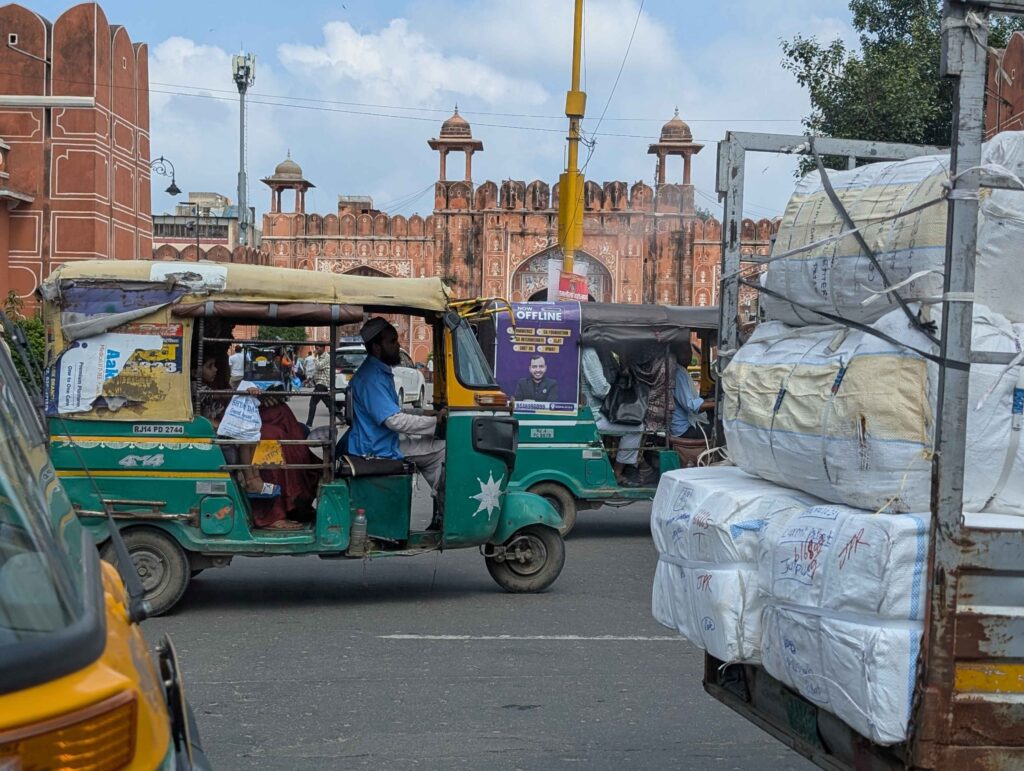
Re-think walking: The cities in the Golden Triangle are not walking-friendly, unless you’re okay walking in the middle of the street with all the traffic. The best way to get from point A to point B really is a tuk tuk (for short drives), and a car for longer drives.
We quickly ditched the stroller in this country. We found carrying the kids was easier than strolling them.
Find a driver you like and adopt them: In Delhi, we booked a new Uber every time we needed a car. In Agra and Jaipur, we found a driver we liked and got their phone number. They became our personal chauffer for the rest of the time in the city. That was SO much better! These drivers became our friends, they knew where to take us for good food, local sights, and the best way to experience the city. When we got sick in Agra, our driver Raja got us food and medicine. When we were buying souvenirs in Jaipur, our driver Krishna made sure we got a fair price. It was a win-win for both parties; these guys were grateful for consistent work and we were grateful to have a reliable driver every day!
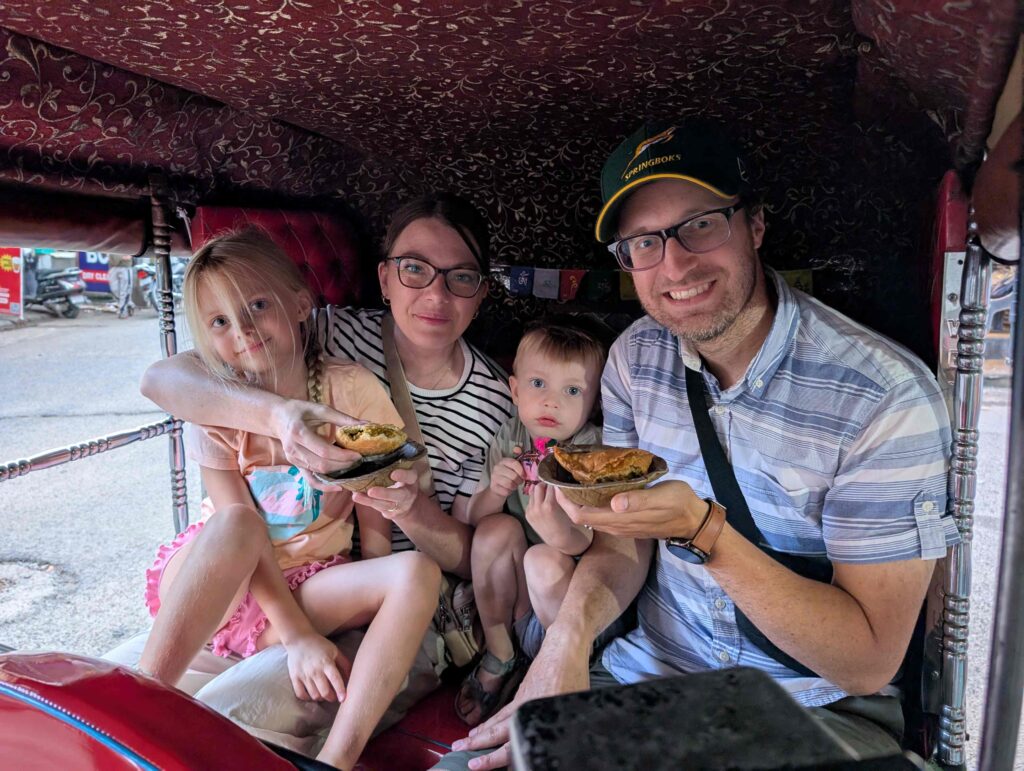
Pro tip – There is nothing like driving a tuk tuk through the crazy streets of any city in India. It’s just a whole new level of engaging your senses than driving in a car. We highly recommend it at least once!
Paying drivers: When using any driver outside of a ride-share service (like Uber), make sure to agree on a price before you get in the vehicle. To get a ballpark of what a drive should cost, look up how much it would cost on Uber. Arranging with a driver should be somewhat close to that number. We paid a little more than Uber because our drivers would wait for us everywhere we went. Sometimes that was a few hours! If you want to sightsee all day, you can arrange a flat daily rate with your driver.
Have appropriate Uber expectations: Uber is very cost-effective way to get around in India. Uber technically requires every car to have seatbelts available, but only one Uber we used actually had seatbelts that worked in the back seats. Drivers would often accept and then cancel rides, so sometimes it took 2-3 tries to get a driver who actually showed up. Lastly, we did not notice a difference in quality of car rides between the lower and higher cost tiers. An Uber Lite and Black were the exact same type of car… so we always opted for the cheapest option.
Inter-city Uber is what we used to get from Delhi-Agra. You can pay the driver a little extra in cash for any sightseeing stops along the way. Definitely book this a few days in advance, and understand you do gamble a bit with car quality when you book with Uber. If you want a better quality car, pay the extra for a pre-booked car service.
Do not rely completely on Google Maps: Of everywhere we’ve traveled in the world, Google Maps has been the least reliable in India. I don’t know if that’s because things are constantly changing there? We looked up ATMs multiple times, walked to the location stated on Maps, and… there was no ATM anywhere in sight. We’d walk to where a restaurant was supposed to be and… it’s actually 3 streets down. Google Maps can get you in the general vicinity, but then you’re on your own to find it (or ask the locals like we did, who were happy to point us in the right direction!).
Please also note that it took almost double the time stated in Maps to get anywhere in Delhi. Agra and Jaipur were much more accurate, but Delhi traffic is so insane you’ll never get an accurate arrival time. I think Google hasn’t figured out how to account for scooters, motorcycles, tuk tuks, & camels traveling with all the cars!
Last Tips
Food: I won’t dwell much on food here because you can find ample other sources on how to safely eat in India. Here’s what we would definitely advise.
- Don’t be afraid to ask where water is from. You’ll not offend anyone who is actually using good water! Always, always ask if water is filtered or from a bottle.
- Steer clear from ice, even though it’s so tempting! Also, remember to ask about water sources when ordering cocktails or other drinks that use water in them.
- Steer clear of pre-cut fruits and raw veggies, as the washing can be contaminated. We loved buying whole melons, custard apples, mangoes, and bananas! They were always safe.
- There are so many other warnings about meats, drinks, you name it. But don’t let that stop you from trying the incredible cuisine here. We were cautious and though we had mild indigestion, we were okay. Drivers and guides will take you to great places, so trust their opinions!
Be aware of rules at each tourist site: Be prepared for security and strict rules about what you can bring at tourist sites. You can look this up online before arrival, so do your research! Everywhere was a bit different, but here were common rules:
- No outside food. Some places had food available inside, some did not, so it’s safest to arrive with a full belly. This made planning the days with our kids a bit tricky sometimes.
- No selfie sticks/tripods. Understandable, but makes taking group photos tricky. Be aware that if you ask someone to take a photo for you, they might expect you to pay a few hundred rupees for it.
- No electronics. This was mostly at temples, but we were surprised a few times by no phones, cameras, or even fans. Anything with a charging port or battery had to be stored in a locker. Historical sites seemed to be okay with electronics, religious sites were hit or miss.
- No toys. Again, some places wouldn’t even let our kids bring toys of any kind. This was especially enforced at Taj Mahal.
Have your boarding pass BEFORE getting into the Delhi airport: We did not know this, but you can’t just walk into the airport. You have to have a boarding pass just to get through the doors! Our airline emailed us the boarding passes the day we bought our tickets – so look out for that and keep it safe. A security guard is at each door, scanning each boarding pass and checking the names with passport names.
A few of the airlines had kiosks outside where you could check-in and get your boarding pass printed… but those were super busy or out of order, so I’d try to check-in before arrival or have that email from the airline handy. Also, give yourself an hour more than you normally would to get to your gate. Lines are CRAZY at the Delhi airport!
As always, feel free to reach out to us on our contact page with any questions about traveling in India! Happy travels!